
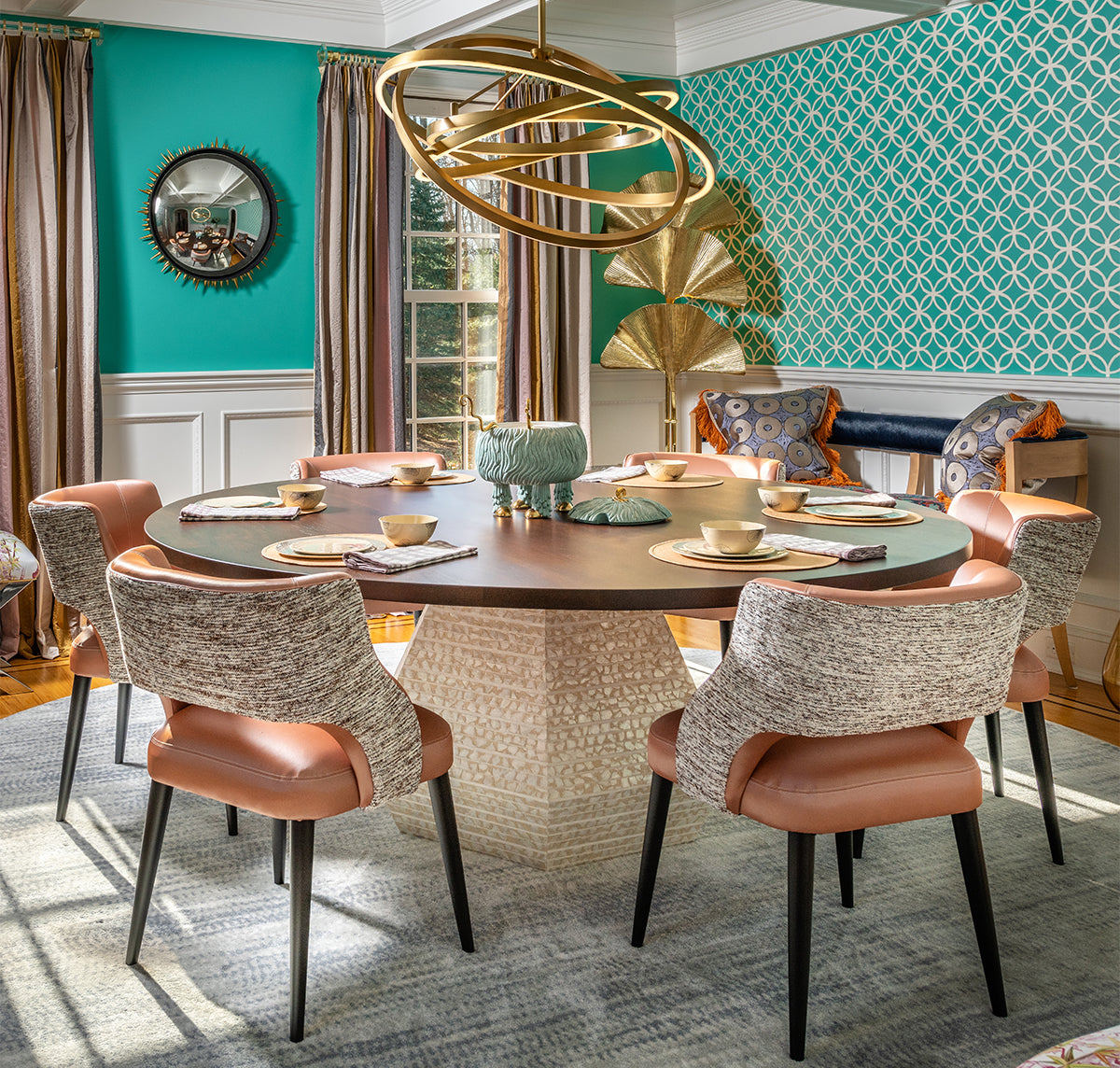

As a new year begins, change is on my mind, a strong wind rushing in fresh ideas while familiar ones are carried away. I’m replacing old beliefs that no longer ring true to me with new concepts that feel like a warm light shining on my face. When I’m navigating shifts in perspective, I ground myself in what I know as an interior designer: building a home that reflects who I am and how I want to live. So, I’ve been contemplating questions that reexamine the concept of home: Which ideas about how we live should be discarded and what new ideas have emerged? How does a home look if we shift our interests from “luxurious living” to “best possible living?” How can a home help us thrive as global citizens? I’m starting to answer those questions via three avenues for design rooted in connection.
The Shift to Sustainable Living: Most broadly, I have a lot of optimism about our global ability and appetite for sustainable home design, which will allow us all to be more responsible citizens of our planet. In the coming years, we’ll get even better at building homes that incorporate carbon neutral energy. More importantly, people will stop fearing innovations that mitigate the effects of energy creation and consumption. Technologies exist, and more are developing, that use a home’s surroundings and even the waste its inhabitants create to generate electricity. Sustainable homes will also reduce unnecessary food transit emissions through integrated homesteading, so that growing food is easy enough to fold into most lifestyles.
Bridges Between Home & Nature: As we build homes that unite us in caring for our natural world, we should also build homes that connect us to it more intimately. Open air has a profound effect on our well being individually and as a society. I envision an organically-shaped house, situated to optimize direct sunlight. This house has a spacious living area, featuring a sizeable portion covered in glass with large, functional windows so that a home in the Northeast can be relatively open to the outdoors from late March to early December. It’s surrounded by cottage gardens that retreat behind glass in winter and reopen to the outdoors in spring, and water features that bridge indoors and out. With houses like this, we can create local cultures representative of all the people in an area, connected by their experience of the natural world.
Unlocking the Vault of Privacy: Moving into the house itself, I believe that natural parts of us are locked away in sprawling homes with siloed spaces for every activity and person. Thoughtfully and economically designed houses offer a path to renewed connection. In a different kind of home, all rooms except bedrooms, bathrooms, and the kitchen will converge into one space where living happens: homesteading, crafting, entertaining, and social lounging. Instead of a kitchen, the house will have areas outdoors and in dedicated to food prep and cleanup, so cooking is more integrated into household life. Finally, I envision replacing multiple bathrooms with a central “water room” that includes private toilets, communal soaking tubs, a shower room, and a steam room. This space is fashioned with stone and wood, lit just enough, money and resources not wasted on vanity but instead focused on comfort and practicality.
Your answers to the questions I posed will be unique to your experiences, but mine shape a refreshing vision of a home that facilitates connections: between those within it, to the natural world around it, and with our global community. If you’re wrestling with big ideas of your own and don’t know how to bring them to life in your spaces, I’d love to connect and find out what we can build together.